
You’ve probably heard of bridal showers, but have you ever witnessed a night where entire rooms pulse with ululation, where grandmothers and cousins gather in a circle of candlelight, their voices rising in ancient songs while skilled hands paint intricate designs that will stain a bride’s palms deep amber for weeks?
I grew up watching my mother, my aunts, transform ordinary Thursday evenings into sacred celebrations, and once you understand what really unfolds during a Moroccan henna party, you’ll see why this tradition remains the emotional heartbeat of every wedding.
What Is a Moroccan Henna Party and What Happens?
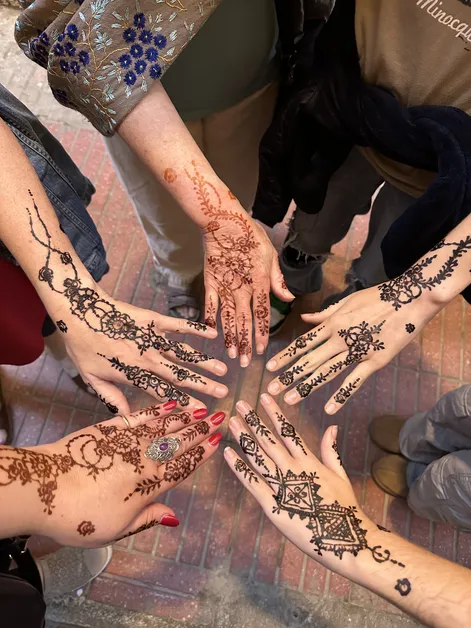
When I think of Morocco’s most treasured wedding traditions, the henna party always rises to the top, a celebration so rich with meaning and beauty that even now I can close my eyes and smell the earthy paste mingling with mint tea.
This Moroccan henna ceremony unfolds one or two days before the wedding, usually hosted by the bride’s mother, where relatives and friends gather for music, dancing, and ritual blessings.
A skilled artist applies the henna paste to the bride and groom’s palms and feet, often hiding the groom’s name within intricate patterns and placing a coin-shaped design at the center.
The Moroccan henna symbolizes protection, fertility, and good luck, marking the couple’s transition into married life.
The Henna Ceremony: From Palm Application to the Amaria Procession
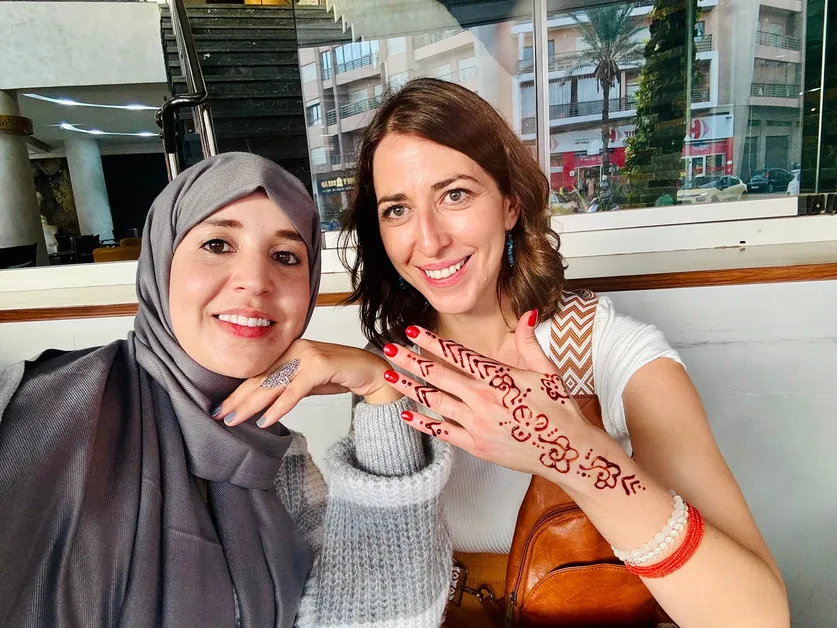
I still remember watching my aunt, the family matriarch, press the first dollop of warm henna paste, shaped perfectly like a round gold coin, into the center of my cousin Fatima’s palm on her wedding night, and the way she whispered blessings while tying a crimson ribbon around both the bride’s and groom’s hands.
After the skilled henna artist finished the intricate designs with her tiny metal syringe, covering both palms in delicate swirls and geometric patterns, we sealed the paste with lemon and sugar so the stain would deepen to that rich, dark maroon we all hoped for.
Then came my favorite part: we lifted Fatima and her groom onto the ornate amaria, that decorated wooden carriage draped in embroidered silk, and carried them through the courtyard while everyone sang, clapped, and balanced trays of honey-soaked chebakia cookies high above their heads.
Palm Application Ritual
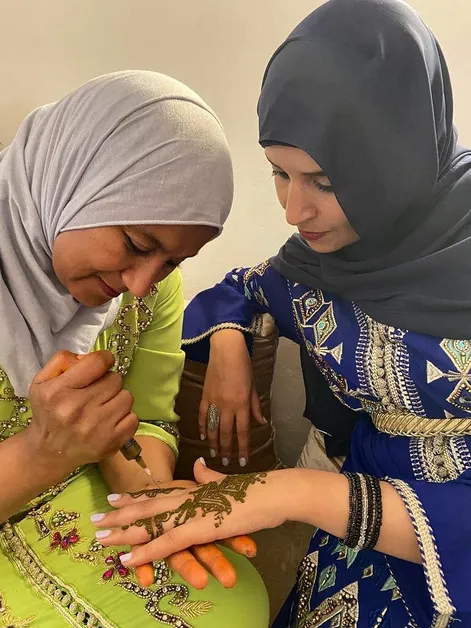
At the heart of every Moroccan henna ceremony sits the family matriarch, my grandmother in our family, her weathered hands steady and sure, who carries the honor of applying the first henna to the bride’s and groom’s palms.
She shapes a round “coin” motif in the center, symbolizing prosperity and abundance for the couple’s new life together.
The paste, ground from Lawsonia inermis leaves, gets sealed with lemon-sugar to help the stain darken overnight.
Sometimes the groom’s name hides playfully within the bride’s design, a secret for her to discover later.
These protective symbols, the hamsa, the watching eye, guard against the evil eye while ribbons tie their hands together, literally binding their futures as family blesses them with songs.
Lifting the Amaria
The henna still wet on their palms, the bride and groom rise from their cushions and prepare for the most breathtaking moment of the evening, the amaria procession, where they’ll be lifted high above the celebrating crowd like royalty.
This ornate wedding carriage transforms every Moroccan wedding into a fairy tale, presenting the couple as king and queen for the day in their lavish keswa el kbira and jellabiya.
I remember watching families circle the elevated pair, dancing with trays of cookies and marzipan, symbols of prosperity and sweetness for the newlyweds’ future.
Musicians play traditional melodies while the couple sits on decorated thrones, their elevated position marking the sacred transition from the intimate henna party ritual to the joyful public celebration.
What Brides and Grooms Wear: Keswa El Kbira and Royal Attire
When my cousin emerged for her henna party in the keswa el kbira, a burgundy kaftan so heavy with gold embroidery and beads that three women helped her walk, I understood why we call the bride “queen for a day.”
The groom wore a matching jellabiya in cream silk with gold thread, sitting beside her on carved wooden thrones while relatives pinned more jewelry onto their outfits between each celebration segment.
Those royal colors of burgundy and gold weren’t just beautiful; they told everyone watching that this couple deserved prosperity, luck, and a marriage as valuable as the metalwork shimmering under the lantern light.
Traditional Bridal Keswa Ensemble
During every henna party I’ve attended, brides wear the keswa el kbira, a magnificent traditional wedding gown so heavily embroidered with gold thread that it weighs several pounds and transforms an ordinary girl into royalty for a day.
The keswa typically features burgundy velvet as its base fabric, adorned with intricate gold patterns that catch candlelight and make the bride shimmer when she enters the room.
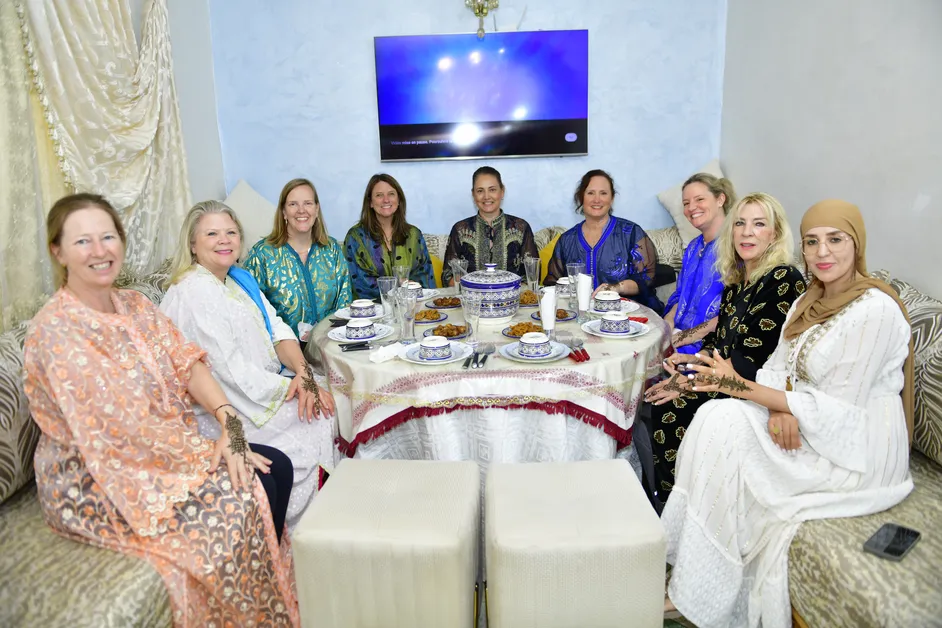
Traditional Moroccan henna parties often include multiple outfit changes for the wedding couple, and sometimes elegant kaftans are provided by the host for honored guests who want to celebrate in an authentic style.
I remember watching my cousin struggle to walk in her keswa, the weight reminding her that becoming a bride meant carrying tradition forward.
Groom’s Jellabiya and Accessories
While brides command most of the attention in their heavy keswa el kbira, grooms also transform into royalty for the henna party, wearing a jellabiya that announces their status as king for the evening.
This long, flowing robe becomes part of the Moroccan wedding ceremony tradition, often decorated with gold embroidery and burgundy brocade that catches candlelight beautifully.
I remember watching grooms arrive, crowned with ornate fez hats, their waists wrapped in decorative sashes that sparkled with metallic thread.
The Henna Tradition demands that both bride and groom dress as royalty, so families spare no expense on these garments.
Gold jewelry and small ceremonial gifts complete the look, attracting good fortune to the couple as they sit enthroned together, receiving blessings from guests who admire their regal transformation.
Symbolic Royal Presentation Elements
As royalty for the evening, the bride transforms into a living vision of Moroccan heritage, draped in the keswa el kbira that weighs heavily with embroidered gold thread and shimmering beads.
She sits elevated like a queen, crowned with ornate headpieces that catch candlelight, while the groom beside her wears his jellabiya with regal accessories, both dressed in burgundy and gold for good luck and prosperity.
This royal presentation holds deep cultural significance within henna tradition, symbolizing the couple’s blessed union before their families.
I remember watching brides change costumes three, sometimes four times during celebrations, each ensemble more magnificent than the last, while guests draped them with gold jewelry.
The metallic threads whispered against fabric, reminding everyone that tonight, these two reign supreme.
Morocco Henna Party Foods: Mint Tea, Marzipan, and Sweet Symbolism
The tea-pourer lifts the ornate silver teapot high above the tiny painted glasses, and the arc of golden-green liquid catches light as it falls, creating foam that tells guests the mint tea has been properly aerated and prepared with love.
At every Moroccan Jewish henna ceremony, this fragrant beverage accompanies trays of marzipan cookies, which families prepare two weeks early, and chebakia, those honey-soaked pastries glistening like amber jewels.
Jewish wedding traditions across Morocco emphasize sweetness as a blessing, so we pile dates, Jordan almonds in pastel colors, and roasted nuts high on silver platters.
Tradition and its cultural meaning shine through abundance: every sugared almond represents prosperity, every cookie signals hospitality, every glass of mint tea welcomes another witness to the bride’s transformation.
What Henna Symbols Mean: Protection, Fertility, and Good Fortune
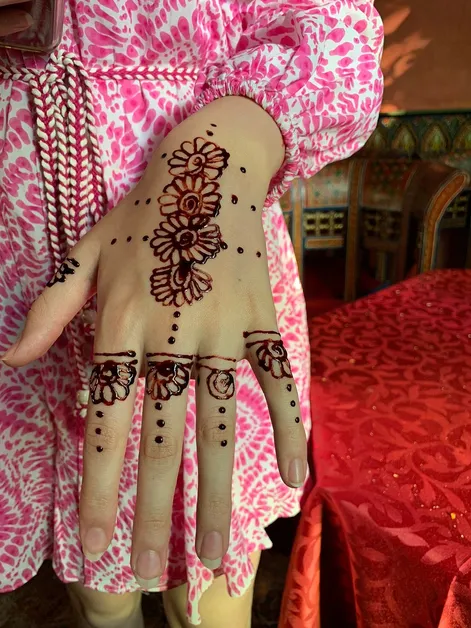
Every swirl of henna paste carries a prayer, and when my grandmother traced the hamsa on a bride’s palm, she whispered the same blessing her mother had spoken decades before in the mellah.
The five-fingered hand protects the couple from envy and jealousy, while diamond shapes create shields around their new life together.
You’ll see the eye symbol throughout traditional henna art, designed to deflect the evil eye and to bless the marriage with clarity and vision.
Circular medallions the size of coins represent wealth and prosperity flowing toward the newlyweds.
The application of henna to the palm’s center builds a barrier against harmful spirits, and floral patterns celebrate fertility and the bride’s passage into womanhood, each motif layered with generations of protective intention.
Who applies the henna, and Who Attends the Celebration?
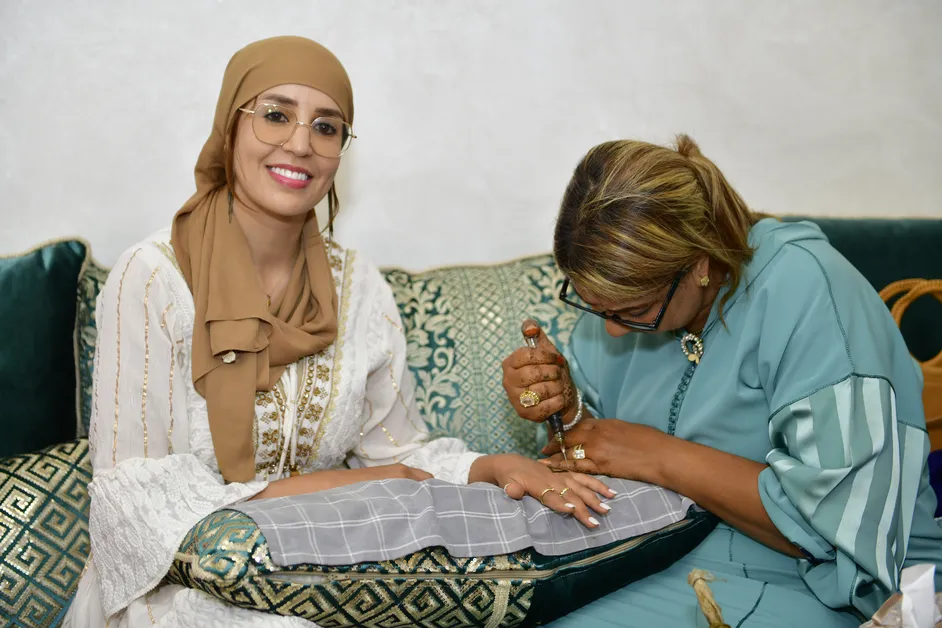
Before those sacred symbols can bloom on a bride’s skin, someone must first hold the cone and channel centuries of blessing through steady hands.
In my grandmother’s time, the family matriarch, the bride’s mother or her own grandmother, performed the central use of henna, placing paste in both palms to shield the couple from the evil eye.
Today, especially in Marrakech and Fès, skilled professional artists paint intricate designs on hands and feet for those getting married, though this centuries-old tradition remains a women’s gathering.
My mother hosted my sister’s henna party, and we women sang, danced, and received our own delicate patterns afterward, while the men celebrated separately, the groom receiving only a simple fingertip mark.
When Henna Parties Happen in Moroccan Wedding Traditions
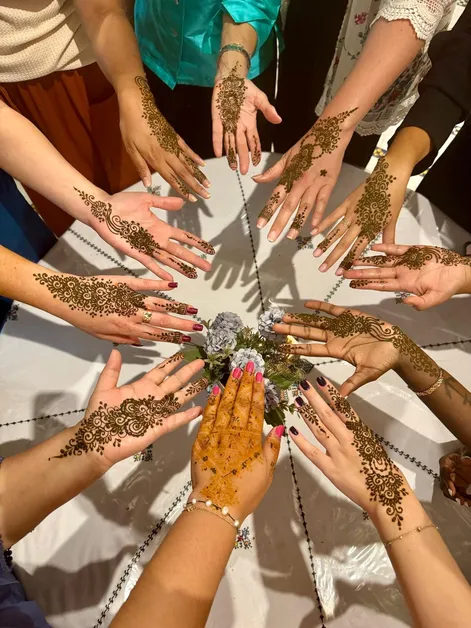
Timing sits at the heart of this celebration, because Moroccan families schedule the henna party, which we call laylat al-henna, one or two days before the actual wedding ceremony, placing it right in the middle of that hectic, joyful week when relatives fill every corner of the house.
Though modern brides sometimes push the event weeks earlier for convenience, we prefer the old way, when the designs from the henna plant stay dark and rich through the wedding day itself.
This tradition didn’t begin in Morocco thousands of years ago; it traveled from the Middle East, but we made it our own.
My grandmother insisted the party take place on Thursday evening, exactly two nights before Saturday weddings, so the bride’s hands would glow deepest when she signed her marriage contract.
From Amazigh Roots to Modern Practice: The Evolution of Henna Parties
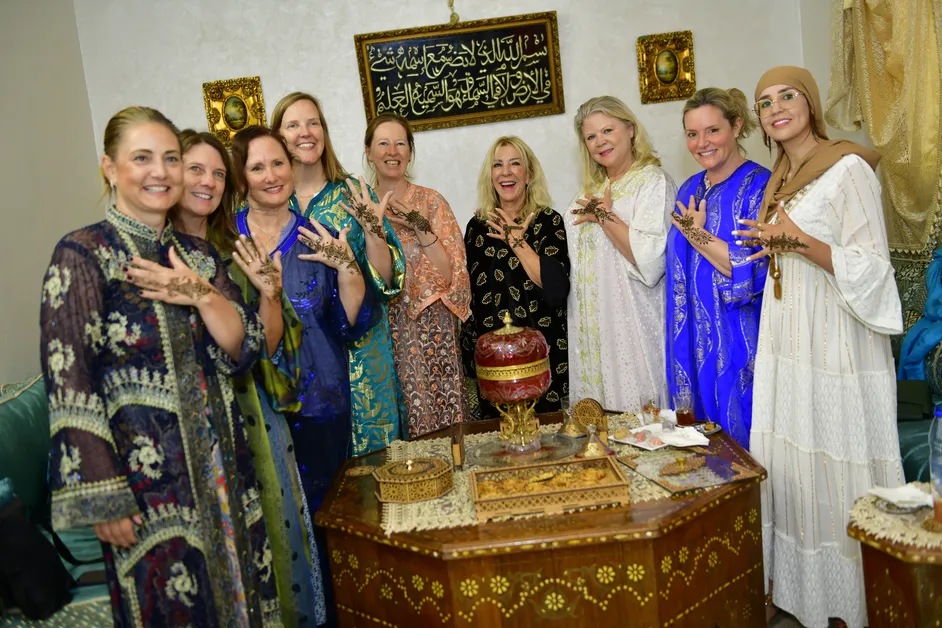
When I sit with the oldest women in my family, they remind me that henna didn’t start as party décor; it began centuries ago with our Amazigh ancestors, who crushed leaves from the Lawsonia inermis plant growing wild in southern valleys and mixed the powder with water to cool their skin under the Saharan sun.
That paste became a good remedy for burns, a form of body protection, and eventually a symbol of baraka passed through Islamic and Jewish households alike.
Over generations, the simple cooling treatment turned into elaborate wedding rituals, with Fessi geometric patterns and communal music replacing quiet application.
Today, planners stage themed events weeks early, supply costumes and thrones, and charge premium fees for artists who still grind their own paste the traditional way.
Final Words
You’ll carry the scent of henna and orange blossom with you long after your own Moroccan henna party ends, the stain fading slowly from your palms like a gentle reminder of blessings given.
Whether you’re planning your celebration or simply dreaming of one, remember that this ritual connects you to generations of Moroccan women who sang, blessed, and celebrated exactly as you will, honoring love with laughter, sweetness, and baraka.