
11 Top Things To Do In Rabat | Morocco’s Capital City
Chama Ouammi
October 11, 2025
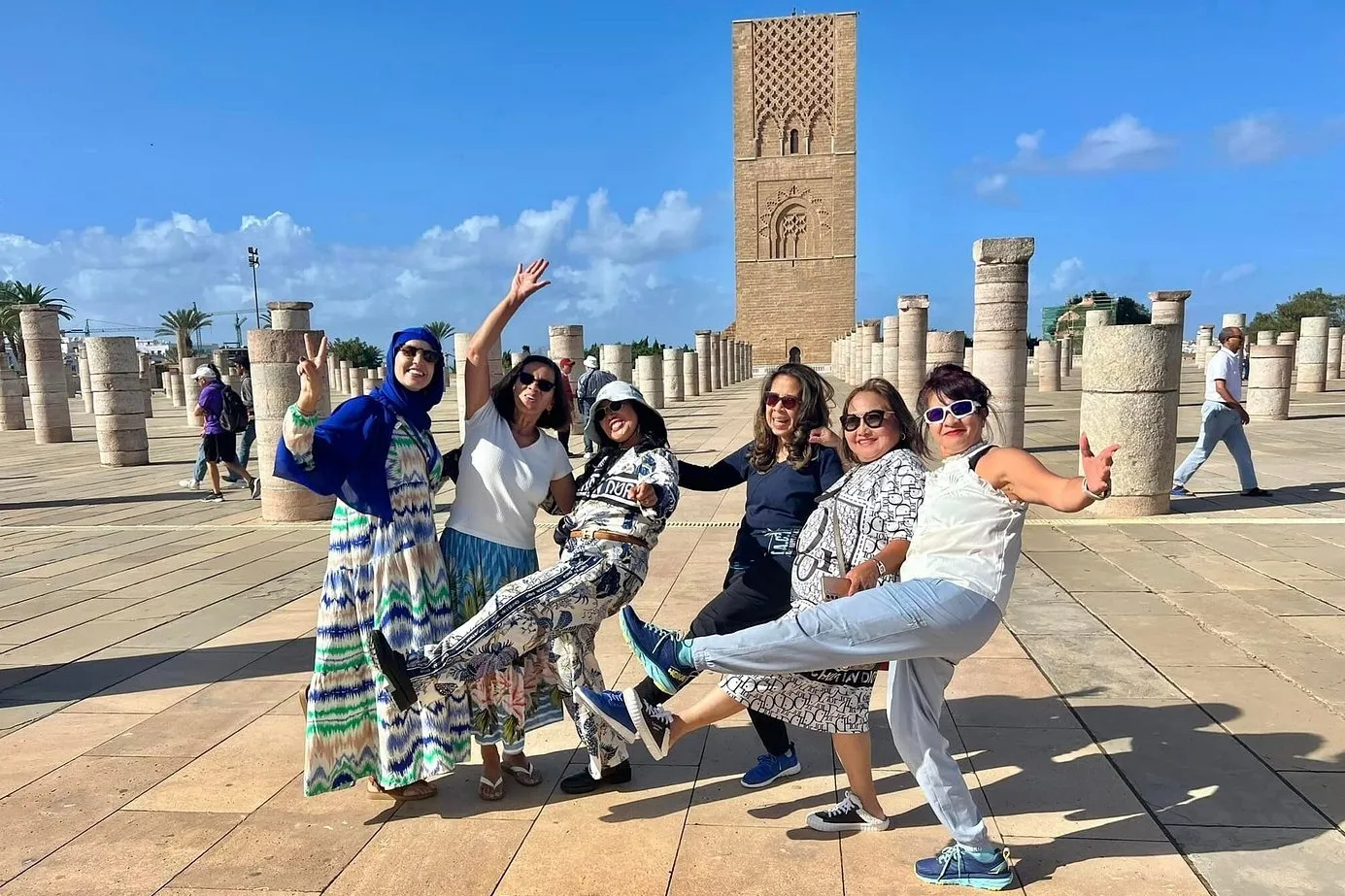
Welcome to Rabat, Morocco’s serene coastal capital perched along the Atlantic, where time flows at a gentler pace than in tourist-filled Marrakech or Fez.
As a lifelong resident and guide, I can tell you our city offers something truly special, a harmonious blend of imperial grandeur and everyday Moroccan life.
From our 12th-century Hassan Tower rising majestically above the Bouregreg River to the pristine white-washed walls of the Kasbah des Oudaias, Rabat’s UNESCO heritage sites tell stories of ambitious sultans and seafaring adventurers.
Yet unlike our larger sister cities, you can explore these treasures without the usual tourist crowds, letting you soak in centuries of history at your own pace.
Modern Rabat pulses with creative energy through its contemporary art galleries and trendy Ville Nouvelle cafes, while the ancient medina’s narrow lanes still echo with the sounds of traditional craft-making.
As your guide, I’ll share secret spots like the hidden tea house in the kasbah where local musicians gather at sunset, and the best time to visit the Royal Palace grounds when the gardens are in full bloom.
Join me as we discover why Rabat captures the authentic spirit of Morocco, from its grand monuments to its quiet neighborhood markets where elderly craftsmen still practice age-old trades.
This travel guide will take you beyond the usual tourist trail to experience the real charm of our capital city.
Overview of Rabat
While many tourists flock to Marrakech and Fes, Rabat offers a calmer way to experience Morocco’s rich heritage as the nation’s capital city.
You’ll find this historic imperial city nestled where the Atlantic Ocean meets the Bou Regreg River, making it a perfect coastal escape from Morocco’s more hectic destinations.
The traditional Moroccan architecture shines throughout Rabat’s old medina, where you can wander through tree-lined streets and discover centuries-old treasures.
At the heart of the city stands the Kasbah des Oudaias, a stunning fortress overlooking the river’s mouth, surrounded by charming whitewashed buildings and Andalusian gardens.
You’ll experience the city’s unique blend of historic and modern elements, from French colonial boulevards to ancient alleyways, all while enjoying Rabat’s refreshingly mild, ocean-influenced climate.
11 Best Things to Do in Rabat
Through Rabat’s laid-back medina and stunning Kasbah of the Oudaias, you’ll uncover winding alleyways filled with local crafts, traditional architecture, and panoramic ocean views.
The iconic Hassan Tower and adjacent Mausoleum of Mohammed V showcase the city’s rich architectural heritage, with the tower’s intricate stonework dating back to 1195 and the mausoleum’s ornate white marble and gilded dome.
For a modern contrast, you can explore the Mohammed VI Museum of Contemporary Arts, where rotating exhibitions highlight both Moroccan and international artists in a beautifully restored art deco building.
1. Explore the laid-back medina
The laid-back medina of Rabat offers a refreshing alternative to Morocco’s more hectic historic quarters, with its peaceful Andalusian-style streets and authentic local atmosphere.
Within walking distance of the Kasbah des Oudayas, you’ll discover whitewashed buildings from the 17th century, when Spanish Muslim refugees settled in the city and shaped its distinctive architecture.
As you explore the Moroccan capital’s historic heart, you’ll find the impressive Grand Mosque, built during the Merenid period, and the bustling Central Market where locals shop for fresh produce and aromatic spices.
For authentic artisanal crafts, make your way to Souq es Sebbat, where you can browse traditional goods away from the tourist crowds that dominate other Moroccan medinas.
2. Soak up the views from the Kasbah of the Oudaias
Standing majestically above Rabat’s medina, the 11th-century Kasbah of the Oudaias offers visitors extraordinary panoramic views across the Bou Regreg River and the Atlantic Ocean.
Inside the fortified UNESCO World Heritage Site, you’ll discover winding blue and white lanes perfect for photography, along with the historic Kasbah Mosque on Rue el Jamma.
At the northern tip of the Oudaias, you can watch surfers riding the waves while taking in sweeping views of neighboring Salé.
Don’t miss the peaceful Andalusian Gardens, where orange trees and bougainvilleas provide welcome shade from the Moroccan sun.
Stop by the garden’s riverside café for a traditional mint tea, then explore the adjacent National Museum of Jewellery & Adornment to admire traditional Moroccan ornaments and clothing.
3. Photography at the Hassan Tower
Morocco’s most iconic incomplete monument rises 45 meters into Rabat’s skyline, drawing photographers and history enthusiasts to capture its intricate carved façade and haunting beauty.
The Hassan Tower, initially planned as part of the world’s largest mosque by ruler Yacoub al-Mansour in the 12th century, stands as a testament to unrealized ambition alongside 348 partially constructed columns.
You’ll find the best photo opportunities directly beneath the tower, where you can capture its impressive scale and detailed Islamic motifs that cover its exterior walls.
The adjacent Jardin Tour Hassan offers a great place to frame your shots, especially during the golden hours when local families gather to enjoy the tranquil atmosphere.
During your trip to Rabat, you won’t find a more photogenic spot in this Moroccan city.
4. Visit the Mausoleum of Mohammed V
Adjacent to Hassan Tower lies one of Rabat’s most significant monuments, the Mausoleum of Mohammed V, built to honor Morocco’s beloved king, who led the nation to independence in 1955.
Inside this stunning city center landmark, you’ll find the ornate marble tombs of both Mohammed V and his son, King Hassan II, surrounded by masterful examples of traditional Moroccan design and intricate zellige tilework.
While visiting the mausoleum, you’ll encounter uniformed guards carrying rifles who generally welcome photo opportunities when asked politely.
Though non-Muslims can’t enter the connected mosque, you’re welcome to view the magnificent tomb chamber from the upper level, where you can appreciate the detailed craftsmanship below.
Remember to dress respectfully when visiting, though women aren’t required to wear headscarves.
5. Visit the Mohammed VI Museum of Contemporary Arts
Art enthusiasts will find a cultural haven at the Mohammed VI Museum of Contemporary Arts, which showcases Morocco’s finest modern artistic achievements inside a beautifully restored French colonial building.
Though compact in size, the museum’s permanent collection features influential artists like Mohamed Melehi and Farid Belkahia, whose works capture Morocco’s artistic evolution since the mid-20th century.
After exploring the exhibits, you’ll discover rotating temporary installations that highlight both emerging local talent and international artists near the des Oudaias quarter.
The museum offers a perfect counterpoint to Rabat’s traditional artisan scene, demonstrating how Morocco bridges classical and contemporary expression.
Before leaving, stop by the museum café overlooking the Jardin des Oranges, where you can reflect on the artwork while enjoying orange blossom tea and local pastries.
6. Wander the elegant Ville Nouvelle
When you explore the enchanting Ville Nouvelle district, you’ll discover an elegant neighborhood that showcases Rabat’s French colonial heritage through its striking architecture and tree-lined boulevards.
Along Avenue Hassan II, you can trace the 17th-century defensive wall that separates this modern district from the ancient medina, while the magnificent Royal Palace, built in 1864, stands proudly to the south behind its impressive walls.
The district offers several cultural attractions, including the Archaeological Museum and the fascinating Postal Museum on Avenue Mohammed V, where you’ll find an extensive collection of Moroccan stamps, telephones, and telegraph machines.
For practical matters, you can visit the Rabat Ville railway station, which serves as a convenient transportation hub for your ongoing travels.
7. Delve into history at the Rabat Archaeology Museum
Established in 1932, the Rabat Archaeology Museum stands as Morocco’s premier archaeological institution, housing an unrivaled collection of ancient artifacts that span millennia of human history.
Inside the museum’s expansive galleries, you’ll discover an impressive array of prehistoric human remains dating from the Middle Paleolithic to Neolithic periods, offering insights into early human civilization in North Africa.
The museum’s most captivating exhibits showcase bronzes, ceramics, and statuary objects excavated from significant archaeological sites, including Lixus, Volubilis, and Chellah.
Though the collection features fascinating artifacts from pre-Roman civilizations, it’s the well-preserved items from these three ancient cities that truly highlight Morocco’s rich archaeological heritage and make this museum an essential stop for history enthusiasts visiting Rabat.
8. Tour the Ancient Necropolis of Chellah
The ancient Necropolis of Chellah stands as a testament to Morocco’s layered history, combining Roman ruins with medieval Islamic architecture in one sprawling archaeological site.
Located on the southern bank of the Bou Regreg River, this UNESCO World Heritage Site houses the remains of a Roman settlement called Sala, where you’ll discover well-preserved ruins of forums, baths, and temples dating back to the first centuries AD.
When the Merenid dynasty arrived in the 14th century, they transformed the area into a fortified citadel, adding their own architectural elements to the existing Roman structures.
Today, you can explore both historical layers while observing the site’s resident colony of storks, which have made their homes among the crumbling walls and ancient stones.
9. Spend an Afternoon in Salé
Looking to escape Rabat’s tourist zones? Head across the Bou Regreg River by tram to discover the authentic riverside city of Salé, where you’ll rarely encounter other tourists exploring its atmospheric lanes and bustling souks.
Within Salé’s medina, you can visit the beautifully restored Abou Hassan Medersa, a 14th-century Islamic school that showcases intricate architectural details, and explore the striking Mausoleum of Sidi Ben Ashir.
For sweeping views, climb along the city’s imposing defensive walls, where you’ll overlook both the sprawling cemetery that extends to Plage de Salé Ville and stunning panoramas of Rabat across the river.
The traditional atmosphere of Salé’s streets and marketplaces offers a genuine glimpse into daily Moroccan life.
10. Stroll through the Jardins Exotiques
When seeking serenity just outside the bustling capital, you’ll discover the Jardins Exotiques, a verdant paradise located 13 kilometers north of Rabat’s center.
This extraordinary botanical oasis stands as the masterwork of French horticulturist Marcel Francois, who carefully curated plant species from across Africa, Asia, and South America.
Throughout the gardens, you’ll find ornamental bridges and decorative follies nestled along winding pathways, while towering palm trees create a wild, jungle-like atmosphere above.
For a complete exploration, you can choose between short leisurely walks through the overgrown landscape or tackle the comprehensive three-hour Red Trail, which guides you through every corner of this exotic sanctuary.
11. Birdwatch in Merja Zerga National Park
Nature enthusiasts flock to Merja Zerga National Park, situated 140 kilometers north of Rabat along Morocco’s stunning Atlantic coastline.
The park’s pristine wetlands rank among North Africa’s most significant bird habitats, where you’ll discover an impressive variety of native and migratory species.
Through guided boat tours of the tranquil lagoon, you can spot herons gracefully wading through shallow waters, plovers darting along the shoreline, and majestic flamingos gathering in colorful groups.
The nearby town of Moulay Bousselham serves as your gateway to this natural sanctuary, offering a perfect day trip from the capital with its charming fishing harbor and sweeping beach views.
You’ll want to bring your binoculars and camera to capture the diverse birdlife in this remarkable ecosystem.
Accommodation in Rabat
Whether you’re looking for a luxury riad hotel or a budget-friendly guesthouse, Rabat offers accommodation options to match every traveler’s needs and expectations.
You’ll find the city’s most beautiful boutique hotels within the medina walls, where restored riads showcase intricate zellige tiles, hand-carved cedar doors, and traditional tadelakt walls in warm desert tones.
From the opulent Villa Diyafa in the embassy district to charming family-run guesthouses near Kasbah des Oudaias, Rabat’s diverse lodging choices let you experience authentic Moroccan hospitality at any price point.
Best Luxury places to stay in Rabat
Although Rabat isn’t known for its extensive luxury hotel offerings, the city boasts several exceptional accommodations that combine traditional Moroccan elegance with modern comfort.
When seeking luxurious stays in Morocco’s capital, you’ll find properties that showcase both contemporary amenities and authentic local architecture.
Here are the top luxury accommodations in Rabat:
- Fairmont La Marina Rabat stands as the city’s premier five-star hotel, offering panoramic ocean views and world-class dining.
- Riad Al Mazhar features intricately carved woodwork and traditional zellige tiles throughout its restored palace setting.
- Riad Lalla Zineb provides an intimate luxury experience with its courtyard pool and rooftop terrace.
- Villa Mandarine combines colonial charm with modern luxury across its orange grove grounds.
- La Tour Hassan Palace delivers royal treatment with its hammam spa and refined Moroccan cuisine.
Best Mid-range places to stay in Rabat
Rabat’s mid-range accommodations strike a perfect balance between comfort and value, with several well-appointed riads offering authentic Moroccan hospitality at reasonable prices.
For your mid-range stay in Rabat, consider these exceptional riads that combine traditional architecture with modern amenities:
- Riad Al Bahi features elegantly decorated rooms with traditional Moroccan textiles and handcrafted furniture.
- Riad Dar Ali offers peaceful courtyards filled with fragrant orange trees and comfortable lounge areas.
- Riad Dar Karima provides spacious rooms with intricate tilework and private terraces.
Each riad includes a daily breakfast featuring local specialties and fresh-baked bread.
All properties are centrally located within walking distance to major attractions.
These accommodations typically include ensuite bathrooms, air conditioning, and complimentary Wi-Fi, while maintaining authentic Moroccan design elements throughout their carefully restored historic buildings.
Best Affordable places to stay in Rabat
Even on a tight budget, you’ll find several comfortable and authentic places to stay in Morocco’s capital city.
The local riads offer an immersive experience of traditional Moroccan architecture and hospitality while keeping costs reasonable for budget-conscious travelers.
Consider these affordable accommodation options in Rabat:
- Riad Meftaha: Located in the medina, featuring traditional décor and courtyard views
- Riad Marhaba: Offers comfortable rooms with authentic Moroccan furnishings
- Dar El Yacout: Provides basic amenities in a historic setting
- Local guesthouses: Found throughout the city’s residential neighborhoods
- University area hostels: Perfect for backpackers and student travelers
Each of these budget-friendly options puts you within walking distance of major attractions, and they typically include essential amenities like Wi-Fi and daily housekeeping services while maintaining the charm of traditional Moroccan hospitality.
Best time to visit Rabat
While Mediterranean breezes keep temperatures pleasant throughout the year, spring stands out as the prime season to visit Morocco’s capital city.
From March through May, you’ll enjoy mild temperatures around 16°C, perfect for exploring Rabat’s historical sites and blooming gardens.
Summer brings warmer weather with temperatures climbing into the high 20s, yet you’ll find fewer tourists here compared to Morocco’s other major destinations.
If you’re planning an autumn visit, you can expect comfortable temperatures ideal for meandering through the medina’s winding streets and local markets.
Winter remains mild in Rabat with temperatures in the low to mid-teens, though you might encounter occasional rainfall, which rarely interferes with sightseeing activities.
How to get to Rabat
Getting to Rabat is straightforward with multiple transportation options, including direct international flights to Rabat-Salé Airport and convenient train connections from major Moroccan cities.
You’ll find regular bus services linking Rabat to destinations throughout Morocco, while private transfers offer a comfortable door-to-door alternative for those seeking extra convenience.
Whether you’re arriving by air, rail, or road, you’ll appreciate Rabat’s well-connected transport infrastructure, which includes an efficient airport shuttle bus service that takes you directly to the city center in just 15 minutes.
How to get to Rabat by Plane
Since most international visitors arrive through Rabat-Salé Airport, you’ll find it’s conveniently located just 8 kilometers northeast of the city center.
The airport operates daily flights connecting Rabat with major cities throughout Morocco and numerous European destinations, making it an accessible entry point for your Moroccan adventure.
When you land at the terminal, you’ll have two primary transportation options to reach the city.
You can either take an official taxi waiting directly outside the terminal, which will get you to central Rabat in approximately 10 minutes, or pre-book a private airport transfer service.
If you’d prefer to avoid negotiating fares upon arrival, booking a private transfer in advance ensures a driver will be waiting to welcome you and transport you directly to your accommodation.
How to get to Rabat by Train
Morocco’s efficient train network makes Rabat easily accessible from major cities across the country.
The national railway service ONCF, provides frequent daily connections that’ll get you to the capital with comfort and convenience throughout your journey.
You’ll find regular train services running between Rabat and Morocco’s most visited destinations, with travel times that make day trips entirely possible.
From Casablanca, you’re looking at just a one-hour ride to reach the capital, while trips from Fes take approximately three hours.
If you’re departing from Marrakech, you’ll need to plan for a longer journey of about three and a half hours, but the trains offer comfortable seating and scenic views along the way.
How to get to Rabat by Bus
Travelers seeking budget-friendly transport will find regular bus services running to Rabat from major Moroccan cities throughout the day.
You’ll discover efficient connections from popular destinations, with journey times varying based on your departure point and the specific route you choose.
From Marrakech, you can expect a 4.5-hour journey to reach the capital city, while trips from Fes take approximately 2.5 hours along well-maintained highways.
Once you’ve arrived in Rabat, you’ll have easy access to neighboring cities, including Casablanca, which is just an hour away by bus.
The extensive bus network provides a cost-effective way to explore Morocco’s cultural landmarks and historic sites, making it an ideal choice for travelers who want to maximize their budget while experiencing the country’s diverse destinations.
Travelling to Rabat by Private transfer
While bus travel offers affordability, private transfers provide the ultimate convenience for reaching Rabat.
You’ll enjoy door-to-door service directly to your accommodation, eliminating the stress of navigating public transportation or negotiating with local taxi drivers in unfamiliar territory.
When booking a private transfer, your driver will meet you at your departure point, whether it’s another Moroccan city or the airport, and handle all your luggage throughout the journey.
This option proves especially valuable if you’re traveling with family, carrying multiple bags, or arriving late at night when public transportation options are limited.
The seamless experience allows you to start your Rabat adventure refreshed and relaxed, without worrying about bus schedules or finding your way through an unfamiliar city.
Is Rabat worth visiting?
Despite being less frequented than other Moroccan cities, Rabat stands out as a hidden gem that deserves a spot on your travel itinerary.
As Morocco’s seventh-largest city and its capital since 1955, Rabat offers cultural treasures without the overwhelming crowds you’ll find in Marrakech or Fes.
Along the Atlantic coast where the Bou Regreg River meets the ocean, you’ll discover a perfect blend of historical sites and modern attractions.
The city’s rich heritage dates back to the 12th-century Almohad dynasty, and you can explore exceptional museums, ancient ruins at Chellah, and distinctive architectural landmarks unique to the capital.
With its selection of authentic riads and opportunities for genuine local interactions, Rabat provides a more relaxed way to experience Moroccan culture and history.
People Also Ask
Where is Rabat, Morocco?
Rabat sits on Morocco’s west coast by the Atlantic Ocean.
The city is in northern Morocco, where the Bou Regreg River meets the sea. You can get there easily, it’s one hour from Casablanca and three hours from Tangier by train or car.
The city has good trains and an airport that flies to Europe.
Is Rabat Worth Visiting for Tourists?
Rabat is a great city to visit, with its old buildings, quiet streets, and real Moroccan life.
You can enjoy the city better if you want to avoid the big crowds you find in other Moroccan cities.
How Many Days Do You Need in Rabat?
Two to three days is enough for Rabat.
You can see the main sights in 48 hours: the old medina, Hassan Tower, and Royal Mausoleum on day one, plus the Kasbah and museums on day two.
Add one more night if you really love history and old buildings.
Is Rabat safe to visit?
Rabat is safe for tourists. The capital city is secure for visitors who use common sense.
Keep your money and phone hidden, watch your stuff in crowded places like markets, and don’t wear expensive jewelry if you want to avoid pickpockets.
Is there a lot to see in Rabat?
Rabat has many interesting places to visit. You’ll find great museums, the historic Kasbah of the Oudaias, ancient ruins at Chellah, and boat rides on the river.
The old medina has hidden restaurants and craft shops, making it a fun city to explore even if it’s not as famous as Marrakech or Fes.
Is Rabat a Walkable City?
You can walk around Rabat easily. The city is small and has good sidewalks.
You can see all the cool places like the old town (Medina), the big tower (Hassan Tower), and the castle (Kasbah) on foot without getting too tired.
Is Rabat Nicer Than Casablanca?
Rabat is a better city to visit than Casablanca if you like quiet places, old buildings, and fun local activities.
Rabat has cleaner streets and is easier to walk around, and people live better lives there if you compare it to Casablanca.
Should I visit Rabat or Casablanca?
Visit Rabat for a relaxed cultural trip, and Casablanca for modern city life.
Rabat is smaller and easier to walk around, with lots of museums and historic sites.
Casablanca is bigger with more nightlife, restaurants, and beach areas.
Take the one-hour train between both cities if you have time to see both.
Final Words
You’ll find Rabat offers an enriching blend of Morocco’s past and present, with the 12th-century Hassan Tower standing alongside modern museums and bustling souks.
Whether you’re navigating the winding streets of the medina, sampling traditional tagines at local restaurants, or taking in coastal views from Kasbah des Oudaias, the capital provides an authentic Moroccan experience without the overwhelming crowds of other major cities.
Plan your visit between March and May for optimal weather conditions.